
Welcome back! Good to see you! Today we go over my thoughts on the Dark Souls RPG, as I start contemplating the next campaign.
The Dark Souls RPG has a lot of promise. Like, the kind of promise I'm willing to hack around to accommodate. So I'm not pretending that this is a perfect game, but I'm not aware of too many games that do this one loop so well. It's half-baked, but the parts that are fully cooked are so good that I can't help myself.
The Way It Actually Works
Dark Souls is a d20 game that isn't about the d20, which is the biggest compliment I can give. D20's are swingy as hell, and this game adds in one wrinkle to the decision: Position (HP). If you fail the roll, you have to decide if it's worth spending Position to succeed. The d20 informs your decision, but it isn't the core decision. Provided the GM provides good information... you now have one heck of a dilema on your hands. Because Position is so fragile in surprise situations, how do you decide which tasks are worth succeeding or failing on?
The decision wouldn't matter as much if it wasn't for just how brutal the damage is. Damage in Dark Souls is around double the damage of 5e, so screwing up rolls in this game can lead to insta-death very quickly. And there's that freaking Wisdom save whenever you die, that does random things to your character if you fail it.. .and you're almost assuredly going to. Each death changes you, for better or for worse, and you simply don't know what the consequences of death might be.
So the core loop, properly played, is this series of calculated gambles, to either allow the failure or to force a success. Position tells you how much leeway you have, and when you die, it changes you, making the next run different. It is a constant, low thrum of anxiety and dread.
It's awesome.
And there's nothing like it, to the best of my knowledge, in the TTRPG space. Not quite so elegantly built, as your Position is your health. Players have an immediate idea of what they're doing, when they're sacrificing Position. The tension is incredible. And if this one thing was the only thing in the game, it would be awesome.
The combat spends for Position (extra damage and extra movement) are understated, but they're extremely useful, especially the movement one. Do not estimate how useful it is to have your speed doubled for a paltry amount of Position, especially if you have a reach weapon. It is for this reason I think the Dark Souls RPG is a grid and minis game: players have issue trying to figure out just how useful the movement spend is, unless they're looking at it and realizing "Waitasec, I can legitimately not be around for the monsters, and force them to come to me." Seeing it is better than any reminder. However, the core “how much should I spend before the GM utterly ruins me” is still quite present.
This Game Has a Right Way to Play It
It is a mudcore dungeoncralwer. You're playing characters who are perpetually stressed-out, pushing their luck, and hoping they can bank up enough souls to level up at a bonfire, before dying. "Muh story" people really need to go find another game. It won't work like that.
HOWEVER.
The rest of the game has a hard time matching up with this loop. Some of it's perfect too. Some of it's... imperfect... and some of it's just outright bad. The fact that the outright bad has to do with the shit editing, making this a book I am forced to write in, is unforgivable. This is a pretty book and I have to mark it up.
Steamforged, get ready for that rant. Coz it’s coming and I do not intend to be gentle. This is shameful stuff.
The Souls System
The souls system, wherein XP and money are collected, is just on the right side of detail. The biggest change is that souls are spent to level up, resetting them to zero. This means that going from level 2 to level 3 doesn't require another 600 souls, but another 900. I cannot overstate just how profound an impact this one change has on the game. The stakes were clarified at the table so powerfully and simply, that almost this alone would have made a Dark Souls game. My players would laugh when they died, because the souls were gone, and they knew that they had screwed up. The punishment was so over-the-top and ridiculous that the players would laugh to tears... or at least I think it was laughter. They kept playing! The horrible punishment forced them to try to learn to navigate the environment.
Skills
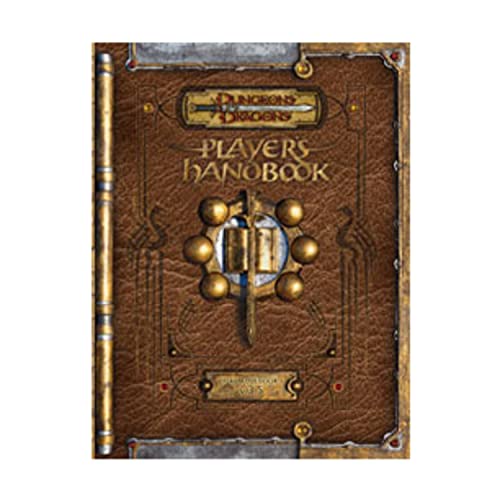
Skills is a spot where the game rules definitely needed to be more fleshed out... to the point where I considered just doing the 3.5 skill system, or adapting it somehow. There was some guidance on how to adjudicate challenges outside of combat in the core book... but it's not a lot. Folks, this is mudcore OSR, and that's that. And the rules for adjudicating mudcore dungeoncrawl are... adequate. They're not terrible. But they're not good. I wanted crunch here, to support me as I played. Maybe you won't, but it came up a lot for me, personally. The "talk your way through the puzzle" sounds nice, until you have to do it a lot. I get exhausted of it. I'd rather have rules to look up and learn. "Find what works for you" is nice... until you have to do it all the time. And this game actually has the depth in its loop to handle crunch... and it doesn't have it. And it should.
The Organization of this Book Makes Me Angry
Of all the things that are a sin in this book, it's the absolutely abysmal organization that does it for me. It goes from "why isn't this table featured more prominently" to "THIS IS UTTER GARBAGE".
The biggest offender, by far, is the miserable lack of page references in the Locations section, combined with the utterly asinine monster organization. There's all these tables with monsters, with no page reference numbers. Nothing. You have to climb through, (and this is true of all THREE books) and figure out where the monster is. And, since the monsters aren't alphebatized, but are instead in "groupings" like "undead", "beasts", "denizens"... and I don't think even the monsters organizations are freaking alphabetized either. It's a nightmare finding monsters.
I have to write the numbers into the book in order for the most important section in the book (for GMs) to be usable! The book's poor organization requires it, and that pisses me off. This is a premium book, one I do not want to make marks in, and instead I'm having to scrawl page numbers because the editors were utter idiots. Utter. Fucking. Idiots. Steamforged really should be ashamed of themselves, but we know that that's not something the company as a whole is good at.
It's not any better with the items. The types of items are not necessarily intuitive, and they're not organized alphabetically either. This makes finding things... really really really hard. And I hate it. It's not an absolute deal breaker, but I'm more than a few months into using this book and I am absolutely not used to it yet. It takes me so much work to do what should be a simple look up, and I have no idea why they did it this way.
The Advice is Stupid
There are.... two...? Two, I think. Lines of good advice in the book.
Do what you want with this game, whatever works for you, is bullshit advice. It indicates a nervousness about having a vision for your game.
The game is clearly mudcore oldschool. It's not a question. The mechanics, if played straight, produce a brilliantly flawed mudcore experience.
And about two lines of the advice serves this.
The rest is just "what do you want your story to be like" and "this game is yours" nonsense.
It is most of the advice in the books. All three of them.
There is no advice on how to make monsters. You have to go find other 5e products for that. Fortunately the monster design itself is pretty darn good, so you don't have to worry about this so much but... this is an outright glaring absence in the game's advice and design.
This Game Is Flawed
There is so much to recommend this game. It is a masterclass in getting players of any experience level invested. When we got done with our short little game, the players all immediately said they wanted to come back to it, after our Pathfinder 2e excursion. One of the players and I swap GMing duties, and you don't pass that kind of thing up. However, we're fully invested in this. I'm making a bigger map. Something we can chip away at as the months and years go on. I'm putting ideas together and I'm really excited. What so few games get right (the essentials), the Dark Souls RPG lands with aplomb.
However, the rest of the game is a mess. A shamefully hard to use mess. Like, the book is fundamentally flawed in its organization, to a degree that is an outright failure on Steamforged's part.
If you're willing to put in the work, you have one of the best experiences you'll ever have for a conventional RPG. If you don't... I really can't blame you, this book's organization is a shame before God and man.
Why Do You Care So Much???
This is a fair question! Why bother?
There isn't a rational answer and I won't pretend otherwise.
However.
I don't have to care if I'm being rational, and neither do you. And the answer may be interesting to you.
Some Things Just Fit
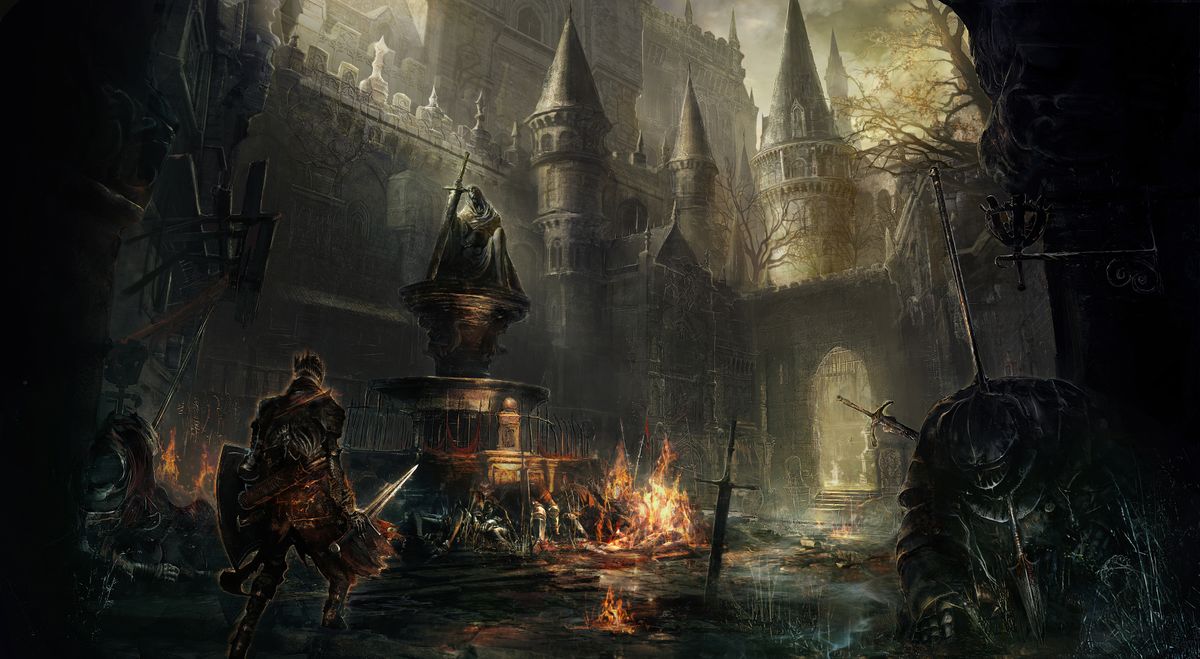
Aesthetics are supra-rational. They are what rationality is derived from. For whatever reason, the visual and narrative aesthetics of Dark Souls is home in a way that no other pre-established setting is. And the game's mechanics for this TTRPG evoke that feeling for me: ruined grandeur, something beautiful turned to something rotted. Which automatically creates this need to make it right again, even if you doubt it can ever be done. For whatever reason this game evokes that sentiment out of me, and I am better person for experiencing it.
One day the flame will return, and all will be well.
Now, that may not be the reason to forgive a game its many flaws for you, but it sure is for me.
And it really does come down to that.
Here I stop. If you I do not see you next week, I do not blame you. It is not easy road.

