Wednesday, January 7, 2026

The Dragon's Fire: Passouan 7


The Prompt

Mild day. The rain from yesterday had spoiled several dozen barrels of preserved food. Nothing directly dangerous, but it is a concern.

Kuri- Raphael

The day dares to call itself mild, but I know better. Yesterday’s rain crept in like a thief, rotting several dozen barrels of preserved food—no blade drawn, no blood spilled, yet the damage is done. It isn’t a crisis… not yet. But shortages are the kind of rot that spreads quietly, testing resolve long before hunger sharpens its teeth.

I’ve seen worse omens begin with less. We endure, we adapt, and when the next trial comes, it will find us leaner, angrier, and very much alive.

Tuesday, January 6, 2026

Heranyt Playtest and The Dragon's Fire - Passouan 4 , 5 and 6

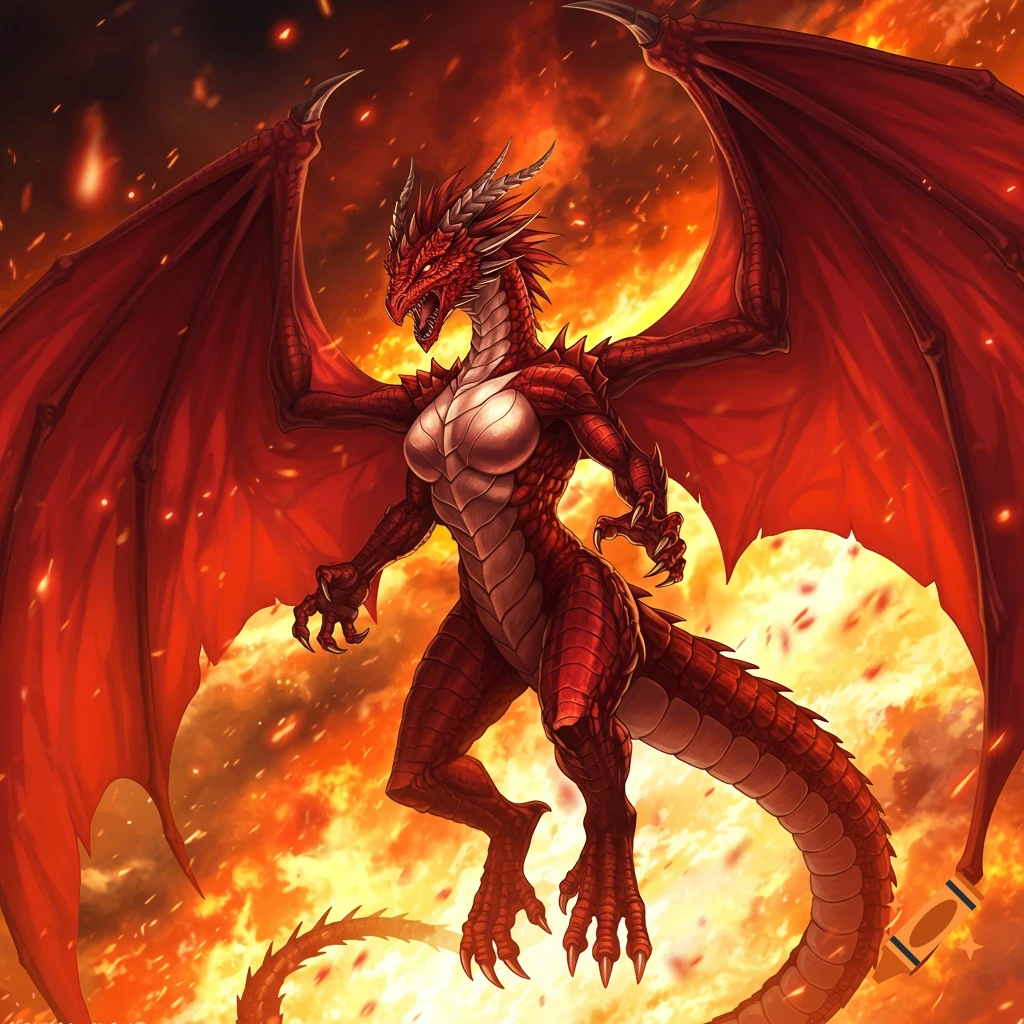
Anime Art of a Red Dragon created on Craiyon

I like reading setting books. I like having a coherent set of vibes that I can just lean into on evenings where I don't feel like reading something more "substantial". Just soak in the vibes.

I hate using setting books while running games. I hate it because there's either too much lore or not enough, and it's impossible to just use the lore immediately. I don't know anyone who personally used a setting book as it was "intended", and the only people I know of who sorta did were using 4e DnD books, which have a lot of crunch in them: using the setting book changed the game itself, so they used the book.

So I decided I wanted to actually make a setting book that could be used, as-is, in a game of Crescendo... which meant that Crescendo needed to be done. And it is. We're getting the text firmed up, which is why it's in Ashcan, but the game's mechanics are done.

So I decided I wanted to make a setting book. Which meant actually making something I would use at the table. This time I decided to try and document what I'm doing in a somewhat public fashion. For funsies.

What I Look for in Designing a Game

The simplest measurement I have for when I design a game or game supplement is that it gives back much more than you put into it. My time is valuable. If the process for playing a game doesn't yield something that's obviously going to be worth my time, I don't want to design it. Or play it.

Now Hold Up

That doesn't mean that the game doesn't take skill or time to master. Or even that the game is easy. I make hard games. Crescendo is a very difficult game to master. The initial entry is quiet low, but once you realize what the game is doing... it takes a long time to produce truly epic results. But the process is extremely rewarding while you do it. It's a process that's fun and challenging.

The Heranyt Setting

So, why my homegrown setting? Simply put, I know it. I have played in it for a long time, and feel comfortable with how much lore should be put in, and what I use. Also, this may come as a surprise to some, but I make my games and stuff so I can use them. For my own amusement. So if I am going to make a setting, it's a setting I am going to use. For me. And that means Heranyt, if I'm going science-fantasy.

Playtesting

Now, the big thing that I insist upon is that setting books fundamentally change how the game is played. It's not merely a skin, it's a different way to play that system. I have absolutely no want or need to make a setting that doens't fundamentally change things.. but I couldn't think of anything. I knew things were missing from the Crescendo experience, but then suddenly-

1:1 Time (It's John McGowan's Fault)

 
- I freaking read "The Living Campaign", by John McGowan, a nice guy who decided to write about how 1:1 time could be useful. For those of you who don't know, 1:1 is an older concept in Dungeons and Dragons, which says that game time is tied to real-world time. Sessions of play are more or less when you check back in with your characters and do something dramatic. 

Something about this setup clicked with me. Wolfe stories weren't quite this formula, but the idea behind all Wolfe stories are that there's something huge going on the background, and it is "the plot". The story is about what happens to the characters when the plot hits them... and then leaves. 

So 1:1 time wouldn't look like in Crescendo what it would in DnD, and that's fine.

The Procedure

Heranyt has some light gameplay astrology to it: the seven planets hang in the sky, and they affect things. 

How Does the Situation Progress?

I would roll a d20 for the scale of the event that day:
1: The situation is totally screwed. Downfall.
2-8: The situation gets worse.
9-14: The situation doesn't get worse.
15-19: The situation slightly improves.
20: The situation improves dramatically.

The Initial Situation

I made a calendar that told me when the principle planet was ascendant (doing good stuff) or descendent (doing bad stuff). For weather, I know that the general location we're at is actually decently similar to my own, so I just check the weather for the day at my house.

How Does the Situation Progress?

I would then check to see if Eous the Evil Moon was ascendant (screwing up the initial bad situation) or descendent (making the situation better). 

The Resolution

I would reference a random line from my journal, to see how it all ended up.

How This Looks So Far

So, here's what we got so far. I s tarted on January 4th, which on my calendar is the 4th of Passouan. It's technically winter, but the locale's in the more southerly climes, relatively close to a gulf. So it's actually decently warm. Here's how the plot's progressed at Sota City, where an uneasy alliance of men and elves keep back the eternal tides of undead attack.

4th of Passouan

Two days from now is The Drowning of Telos, when he was said to have met Elpida, the Flame Eternal. 

Unfortunately,  on this warm and temperate day  General Juhani, a popular elven leader, dies protecting his elven guard from a surprise attack led by the dragon and The Bride. Morale is very low amongst the elves. There wasn't even a body left.

Kuri

So, Kuri responded with two accounts: a historical account and one from the standpoint of her character, Raphael. I didn't anticipate this. I was overjoyed. Both were okayed, given that Raphael's survived run-ins with actual gods before.

Account of the Witness 

On that same day, the one who would later be named in the Wars to Come stood among the elven host, sworn neither to command nor retreat. They felt the turning of fate before the dragon was seen, and raised warning even as shadow fell upon the terraces.

When the attack came, they fought to hold the line beside Juhani’s guard, drawing steel and spell alike. They survived the firestorm only by chance—or by design unknown—cast to the stone as the General made his final stand.

When silence returned, it was they who first rose, and it was their voice that called the living together amid the ruin.

For this reason, the chronicles name them not as a savior, but as the Last Witness of Juhani, from whom the true account of the Fourth of Passouan is known. This what I have written or in historical addendum brain today I can change it up if need be.

Raphael

I stood among the guard when the air turned wrong, warm as a forge without flame. Two days remained before the Drowning of Telos.

The dragon came with the Bride. General Juhani placed himself before us and was unmade. No body remained—only scorched stone.

I fell in the fire.

I did not burn.

When the dragon withdrew, I alone rose where I had fallen. The host was broken, and mourning was decreed.

Fifth of Passouan

Kuri- Raphael

The day before the Drowning, on this day, a hundred of the elves sailed to the stars, hearts shattered by the death of Geneal Juhani. Defenses against the horde are worse than ever before. An envoy has been sent to the wolves of Serpent Forest, and prospects look good. 

I keep watch.
While others mourn or flee to the stars, I walk the walls and count what still stands. I test blades dulled by neglect, trace runes that no longer answer as they should. Juhani is gone, and with him the certainty of command—but not my purpose. I listen for the drums of the horde in the distance and for the answer that may come from Serpent Forest. If the Wolves answer the envoy, I will be ready to meet them. If they do not, I will be ready to hold the line. Either way, I do not leave. My survival—and this stand—were never accidents.

I remain not by chance, but by design—set aside to remember what others were meant to forget.

Sixth of Passouan

It’s a warm winter’s day, the Drowning of Telos is today. Heavy rains cancel the festivities for off-duty soldiers. Drunken debauchery amongst the humans follows, elves are disgusted.

Kuri-Raphael

Rain drums the eaves where I stand still.
Below, humans drown in ale and noise,
laughter rotting into shouts.

I do not drink. I watch—
count guards, note shadows, feel the night shift.

An elf turns away in quiet disgust.
I stay, sober with memory,
waiting for the rain to end.

Conclusions So Far

Only one of the four players has provided responses so far. I don't know how that's going to go, come game time and only one of the four players has been tracking things.

But I think this is the best way forward. I may have to figure out what that means, practically, but it's definitely... it feels right. This is amazing. I love it. I just need to figure out how to channel it to others. 

We'll see how this works!

Friday, January 2, 2026

“You Must Be Human First”


The story goes that a man went to Mount Athos to be a monk. Now, on Mount Athos they assign you an elder, who helps you progress in the spiritual life. You obey your elder, he helps you, you progress. So this particular man goes to his elder and asks him what he needs to do. The elder hands the man a copy of Les Misérables, and nothing else. Confused, the man asks the elder what advice he has for him. The elder tells him "First you must be human, and then we can talk about you becoming a god".

In our totalitarian-minded age, this is vital to remember: true people live from their chest, not their heads. What's in your head advises what's in your chest, but it cannot, should not attempt to, control it.

What do I mean by this?

To be truly human is to be driven toward something. Something within you  burns, and you feel it in your chest.  This is not obsession, it is passion directed. It is to be the servant of the Muse who speaks in your ear. Some may reduce that to mere metaphor, but I don't necessarily mean it that way. The idea that humans are microcosmic receptors of the immaterial universe is a deeply human one. And if it human, it is Orthodox. What most people think of as simply mental is actually relational. That relationship can help you to realize that you were always meant to realize that you were always meant to understand and express something profound about the human condition—something that stirs compassion, mercy, and fierce love in the face of suffering.

Think of Jean Valjean in Les Misérables. Before his transformation, he lives entirely in his head: bitter calculations of injustice, cold survival, resentment hardened into ideology. But when Bishop Myriel meets him with radical kindness, not with judgment or control—handing over the silver and lying to save him—something ignites in Valjean's chest. A burning. Not obsession, but directed passion. He goes to another city, and helps those who he can. After failing Fantine by accident, he becomes driven to protect Cosette, to redeem Fantine’s memory, to build a life of quiet, relentless goodness. 

Jean Valjean's head still advises—strategy, caution, planning—but it no longer tyrannizes the heart. The heart leads, and the man becomes truly human. He is bound to those around him by love, and he allows that to become his telos. It is irrational. He knows it. But rationality is for man, not the other way 'round.

This is what the elder from Mount Athos knew. You cannot leap straight to theosis/divinization, to “becoming a god” through ascetic feats or intellectual mastery, if you have not first allowed yourself to feel the full weight and wonder of being human. The totalitarian mind—whether in politics, ideology, and especially guided "spirituality"—demands control from the top down: the head suppressing the chest, reason smothering passion, systems crushing the individual soul. But true freedom, true divinity, begins lower down, in that fire in the chest that refuses to be extinguished.

In our decrepit age, we are taught to fear that fire. We are told it is dangerous, irrational, uncontrolled. We are offered systems—political, therapeutic, and especially spiritual—that promise to manage it, channel it, or put it out altogether. Putting it out is the end goal, just for the record. But the elder on Mount Athos knew better. He did not hand the young man a rulebook or an academic theological work that would leave him cold but giddy, like being atop a lonely mountain. The elder handed the novice a novel full of broken people, impossible mercy, and love that costs everything. Because only when we have wept with Valjean, raged with Javert, and felt the unbearable weight of grace can we begin to know what it means to be human.

Only then can we stand before God not as clever ideologues or disciplined ascetics, but as wounded, burning hearts that have learned to love in spite of everything. Especially our deluded ideas about reality. Those must go. 

So do not rush to silence the fire in your chest. Do not let the totalitarian spirit—inside or outside you—convince you that safety lies in control. Guard that fire. Feed it with beauty, with stories, with acts of mercy that make no sense on paper. Let it lead you, and let the mind follow as servant, not master.

First become fully human.

Only then will the path to becoming a god begin to open.

Friday, December 19, 2025

The Empty Riverbed


It’s May 2021. I was five years into continuous flashbacks from CPTSD, since 2016. My waking days were filled with harsh and awful memories... and for a time I had consolation in sleep. But, beginning in 2018 dreams of a black-haired girl were becoming more frequent and intense, robbing me of sleep as an escape. Burning Wheel was my way out. I ran campaign after campaign after campaign, some of which never made it onto this blog. I was playtesting Heroes of the Grid and loving it. Then I finished The Book of the Short Sun, and everything changed. Suddenly I realized I had put too much into making Burning Wheel do what I had made it do… and I was running out of energy. But I loved what I was doing! 

For a little while I didn't understand that I was on borrowed time. The concept that I was a limited being, who was harried and tired and about to collapse, wasn't a part of me. I denied it as hard as I could. 

But I did collapse.  

Suddenly I had nothing left. I don't know how else to describe it. I was empty.

For whatever reason, I was left with a choice: I could either design a game that worked with me better in the long run, burning off whatever was left, or I could slowly spiral into the dark. Why was it that choice? I have absolutely no idea, but that's what I had. I don't make the rules here.

But it was a simple decision, all told.

One problem: I had no design experience. Or game writing experience. In fact, the previous designs I had attempted were awful, by and large. It was a common joke that my homebrews were to be avoided at all costs. And I felt, for lack of a better word, dead. Utterly dead. There was no drive, but absolutely no native ability at all.

That didn't stop me from trying, of course. I declared I was working on Crescendo and just started. I wrote and rewrote and rewrote drafts of the rules for Crescendo. But I couldn't figure what to aim for. I just sorta... swung. Wildly. I hit a few notes, but they felt like they were accidents. That was better than before, sure! But accidents aren't something you can reproduce, and I needed the systems I was designing to reliably reproduce results. There was just a feeling that I needed to somehow keep feeling like I was reading Short Sun for the first time. And I realized I had absolutely no internal barometer to measure anything, anymore. I had all the drive in the world, but no knowledge. And definitely no talent.

And then The Warning released their version of Enter Sandman. By this point in time I was a big fan of the band, and knew their cover was coming. I was really excited for it! The cover was what put them on the map, as they've related repeatedly. So I was happy they were leaning into it and Metallica were helping them. So I was there, at debut on YouTube, excited to see what they had come up with.

I hit play.

Something shifted.

It wasn't just a solid cover — it was ferocious, precise, and carried a kind of raw ownership that made the original merely a blueprint. The Warning had transmuted it into a sonic cathedral. Dany, Pau, and Ale didn't cover the song, they took it for their own. Remade it. When I think of Enter Sandman, Metallica doesn't even enter the conversation for me anymore. Hell, I barely remember what it sounds like now. The Warning's version of Enter Sandman is a journey through a land old and dark, to a crescendo atop a mountain, bright and loud and hot.

In that moment, everything I'd been wrestling with in Short Sun clicked into place. Short Sun isn't the sterile modern heroism, but the older and truer model: the man who leaves home, becomes the legend, but loses pieces of himself and then must reforge. Horn's splintered memories, Silk's quiet command, the unreliable narrator piecing together a new self.

Crescendo suddenly had the beginnings of a soundtrack. 

It all clicked together.

The "dead" feeling I'd been carrying didn't go away.  Instead, there was a torrent of fire going through the dried riverbed that was me. It wasn't the frantic Burning Wheel brawls of spouting flame, but something slower, mythic, something that built into a roaring inferno. Wolfe's Short Sun whispered through speakers at me: the papermaker realizing he's the rajan now.

I sat for a few minutes after the video, in shock. I rewatched it four times, right then and there. I couldn't feel something in me, but I could feel something. Suddenly, I knew what I was doing wrong with Crescendo. It wasn't  mechanics that I needed to put together, but to replicate the feeling. I needed the jolt of recognition that Wolfe had been training me to chase.

From that day forward, all the dozens of prototypes I wrote over the next two years had a new north star: capture the sense that something ancient and vital had just been reborn through human hands. The fire wasn't a part of me. I wasn't looking to replicate something I felt, but a perception of a reality that fed me. I wasn't trying to replicate the feeling I had, but to lead people to the watering hole and let them drink as deep as they wanted.

I didn't know the goal in a way that I could say, but it became clear: a slow-building crescendo, carrying players from internal fracture to something new, something they didn’t know they were missing until it arrived. Not because the Weaver (GM) forced it, but because the game had led us all to a frighteningly wondrous place. The game would then get out of the way and let the eternal Now work. It took years of wild swings, dead ends, and quiet rewrites, but the prototypes started breathing. Players would sit down exhausted or numb and walked away with the same jolt: “Something just shifted.”

And with Crescendo, I succeeded. I did it. And I didn't do it because I looked at a set of mechanics, but because I realized that gaming can be an evocation of a reality that's bigger than the participants. Four and a half years later, looking back from December 2025, I can see September 2021 for what it was. 

The bottom of the riverbed, not the end.

Short Sun taught me that the quest fractures you, leaves you pieced together wrong, but in all the right ways.

It's December, 2025. Crescendo's second full Ashcan draft is done, just waiting for the cover from the artist. I'm happy with that. It's going to be worth the wait. I mean, look at that! On the right! How crazy is that??? Thats the cover illustration done for my game. The guy who couldn't design worth shit all of a sudden... has a game. With an amazing cover illustration, inbound. The fire going through the trench has been dimming a long time now.

I am absolutely astounded. I didn't dream of this.

But something shifted in my mind. I don't know how it did so, I don't really know why. But suddenly a new flame started going through the trench. I knew it for what it was, immediately.

And now, while I am helping Crescendo find its way, something new is starting in its place. Something darker. More violent.

Something involving wolves and panthers.


Friday, December 12, 2025

Eating Crow: Positive Design and Mustafar

Eating Crow is when I admit a previous blog post was wrong, and why I think it was. This is a continuation a previous post. I recommend reading it. 


The Mustafar Duel is one of the big influences on Crescendo. Two brothers who have been molded by their experiences, who thought they meant the world to each other, only to discover they value their ideals more. This kind of moment should be happening in Crescendo all the time! But, in my years of playing, it has never come up since the metacurrency is dropped. 

Why?

Metacurrency is one of the chief tools of what I call Positive Design: do a thing and get rewarded for doing it! This triggers the Pavlovian response, and players then go for those kinds of actions instinctively. It’s a powerful tool. But this kind of design has a downside: it can short-circuit the soul. People just start chasing the kick. So, for a long time, I removed metacurrency rewards from Crescendo and focused on Negative Design, which allows players more inherent freedom. This sounded like a good idea. And I think Crescendo is a great game as it is in part because I focused on making the game inherently fun, without the dopamine kicks. Gameplay is smooth and easy and surprising. No session of play is like another. As it stands, Crescendo is by far the best long-form “storygame” I have ever seen.

But. There’s not even one Mustafar match, in a game about Heroes possessed by Beliefs. And that’s not how that’s supposed to work. Heroes are uneasy allies normally, or passionate friends/enemies. Crescendo not doing that experience is a critical flaw.

So what gives?

Well, it turns out I messed up. See, certain actions are just inherently unpleasant. Sticking to your Beliefs past the point of opposing another player is one of them. So the dopamine rush incentivizes you past the discomfort. And there are moments that should happen in Crescendo that are very uncomfortable. Like almost killing your brother. 

So, here’s how I changed the game. About a week before editing begins. It’s fine.

Fate Points

This is a metacurrency that can be spent to reduce the Margin during a Defy (which keeps the setting from changing in huge ways) or reduce an incoming Condition’s level, one for one. 

If you beat a Defy by 3, you can spend 3 Fate Points to make the Margin 0, instead.

So if you get a level 6 Lonely Condition (which would kill your Hero), you can spend 5 Fate Points to make it a level 1 Lonely Condition instead.

 You may cancel a Crescendo (a huge plot twist which has enormous consequences) for 8 Fate Points. Hit the Books to see what strange thing happens instead.

End of Chapter 

Go through each Belief. If there are multiple Players, go to a different Player each time. 

- Did you act on the Belief in a way that created trouble for others, particularly the other Players? If so, record a Bullet Point (a sentence in your Journal, which counts as XP for advancement) and take a Fate Point. 

- Did you act against a Belief in a way that created trouble for others, particularly the other Players? If so, record two Bullet Points. One is the action, the other is why you did it. Take two Fate Points. 

-If there are multiple Players, did your actions cause another Hero to receive a Condition? If so, take a number of Fate Points equal to the lowest level of Condition received. Write the Belief you acted upon to harm the other Hero as a Bullet Point.

- If you change a Belief voluntarily, take a number of Fate Points equal to the number of Chapters (sessions of play) you held it for.

Normally I would be reticent to allow Fate Points to be taken for acting on or against all your Beliefs. The dopamine kick would be very strong, and players would start gaming the system for Fate Points instead of actually role playing. 

But Crescendo has an answer for this: the Journal! 

You have to write the action down, forcing the more rational part of the brain to tun on alongside the dopamine lover, which is definitely one of the most human things one can do. It turns from “press button get pellet” to “I did something meaningful and here’s a pellet!” Humans are rationalizing animals. The more often you can get both halves of that existence to turn on at the same time, the better your life.

A further knock-on effect is that the Weaver can really take the gloves off. Role playing is a social activity, and giving out Conditions hits the “feel bad” center in the brain. Players, however, now have a means of lowering the sting, should they choose, using resources they earned. Defies, which can be extremely tumultuous, can be used only when the player actually wants to. Players have more control over the story… provided they mess things up themselves. From victimizing to empowerment!

Positive Design got a bad rap from me in the previous post. Not all actions are inherently pleasant, even if they’re very important to the experience, and therefore Negative Design can’t do much with them. In these cases, Positive Design can smooth over the rough edges, incentivizing actions that Negative Design simply can’t address. It’s a rough lesson to learn, but a vital one.

Thursday, December 4, 2025

The MISSING Tools of the Dark Souls RPG


The Dark Souls RPG is a lesson in poorly written advice. Had I not read as many RPG rulebooks and theory, I would not have been able to figure it out at all. "Do what you find fun" is some of the worst advice you can put into an RPG book, and is the kind of thing that caused me to overwrite on mine own game, Crescendo. But fear not! I have a way of playing this game that's going to absolutely rock your game table.

The Instruments

Before I show you how to run the session, look over the tools we'll be using: the Encounter List, Encounter Die, and Reaction Rolls. These three tricks and mechanics will allow you to run the Level on the fly, with very little prep work.

The intent behind these mechanics is to push the players into situations that require them to utilize the game to navigate the challenges you made, while helping you populate your Level with stuff that your players care about.

Encounter List

The Encounter List tells you what's wandering your Level. Do not. Do NOT. Try to balance it. Get 20 entries on it, from the lowest shitling monster to the highest terror before God and man you want. This is really a matter of taste. 

If you want to grab something from not the Dark Souls RPG, do so, I don't have any advice on adapting monsters at the moment. If you find something that works, let me know!

Encounter Die

Every turn, roll 1d20: on a 5 or less, an Encounter happens. Roll 1d20 on the Encounter List and plop that creature into the environment, 1d6x10 feet away.

Roll 1d20 for each participant, NPCs/creatures included. If you roll higher than their Passive Perception, then they don't know they're not alone.

Reaction Roll

On meeting an NPC initially, roll 1d20, add the highest Charisma Modifier from the group and uses the initial result on the left.

The players accidentally bump into a boar. The highest Charisma modifier is +3. That player rolls 1d20+3, and his total is 10. The boar is Unfriendly: she's not outright attacking, not yet, but no one better get closer...

1-9: Violent, -3 Steps down this track
10-13: Unfriendly, -2 Steps down this track
14-16: Indifferent, No Steps
17-18: Helpful, but Won't Take Damage, +1 Steps up this track
19-20+: VERY Eager to Help, +2 Steps up this track

If a player tries to talk with the NPC, they narrate what they do. The GM tells them a Skill based off their RP, and they roll using that Skill, and the GM uses the result on the right.

Velkor the Herald tries to soothe the boar, motioning for everyone to slowly start for the exit while he tries to calm the boar down. Velkor's player rolls and gets a total of 17: Helpful, +1 up the track, so now the boar is Indifferent. It's not looking for excuses to go after them. With his other compatriots safely exited, Velkor himself has to make a good exit, so he narrates how he slowly edges his way to the exist, trying to not piss this thing off.  The GM grants that this action should be made with advantage, as he had already calmed the boar down a little bit, and it would make sense that he has an easier time of it now.

Nat 2 and Nat 1. Shit.

Something in the way Velkor was backing out pisses the boar off, and it charges immediately.

The Procedure

The following is a rough skeleton. It is not a straitjacket. Sometimes you'll have an idea that works perfectly, on the spot. Go with that idea! The Procedure is only to help you generate ideas so that way you don't have to think about it too hard. However, if that's not the case, if you're not completely inspired right then and there, use this Procedure, which utilizes the above tools.

Each turn, roll 1d20: on a five or a less, an Encounter happens. Roll 1d20 on your Encounter List, to see what the players bump into.

Roll against each player and NPC's Passive Perception. See what the people "in the know" do.

If  one of the players Randomly pick one player, and roll 1d6: 
1-2: Ask them how their Background factors into the Encounter.
3-4: Ask them how their Memory factors into the Encounter.
5-6: Ask them how their Drive factors into the Encounter

Let the player decide the particulars. Respond to their input.

Roll Reaction rolls as appropriate. Let the dice fall where they may.

If combat trips off, follow the rules in the core book.

Conclusion

These tools will let you navigate your Level in a way that feels appropriately Dark Souls. Next week we'll cover the procedures for generating your own Level, the Five Room Web!

If you have any questions, comment on here or hop over to my Discord Server!

Wednesday, December 3, 2025

The Dark Souls RPG is Great, Actually


What Do I Mean by Great?

Greatness is a strange thing. It's not "good", or "bad", but a a vision, a singular thing that screeches something positive, new, above its issues and imperfections and problems. Greatness is not perceived via taste, but through spiritual perception, through a previously existing devotion to wholeness and something higher than quality. If something great isn't approached with wholeness, it produces violent reactions, whether it be with hatred, confusion, or a pernicious apathy whose poison isn't obvious to the one experiencing it.

The Dark Souls RPG, adpated from 5e 2014, is a great RPG. Despite its clear mistakes and foibles, it is one of the most singular visions produced in the last ten years of roleplaying games. It actually invents its own kind of table, with its terms planted like a seed in the mind.

Adaptation Isn't 1:1

The first thing to understand is that the Dark Souls RPG is an adaptation. I know, I know, that sounds obvious. But when you talk about something, its intention has to be looked at. 

What's Being Adapted?

The Dark Souls video games features a singular person starting at a checkpoint called a Bonfire and navigating a series of challenges, looking for another Bonfire to rest at. The challenges are almost entirely combat. If you kill the creatures, you get Souls, which is money and XP combined. If you die, you lose your Souls, and have to go reclaim them. If you explore the map more you'll find "Larger" Souls, which will just "hand" you Souls, as reward for your exploration.

When combat starts, your two resources are HP and Stamina. If you do anything other than a simple move of the joystick, Stamina is subtracted. It regenerates when not used. HP is subtracted when you're hit. Estus flasks, Humanity, and visiting Bonfires restores HP.

Items grant different boosts. Weapons particularly are complex, granting different types of animations and therefore tactics.

Someone who knows the videogames better than I can add more to this, but it is a factual statement of the typical experience playing Dark Souls the videogames.

Video Games Can't Be Directly Ported to TTRPGs

This should be obvious, but apparently the discourse around this game seems to have missed this. Video games don't play like TTRPGs.

The fundamental change, beyond the obvious ones of technology, is the social nature of a TTRPG. Dark Souls, by default, is a solitary experience. Notice the wording. I didn't say Dark Souls isn't social, I said Dark Souls is solitary, by default. Sure, you can summon, but that isn't inherent to the experience. The idea is that it is you against the world. Others can help you, but it's up to you.

Most TTRPGs don't work like that. With the exception of solo play, all TTRPGs are inherently social experiences. Even if it's just one player, the presence of a GM inherently changes the experience. This one change means that a ton has to be changed to keep the experience true to the video games, without trying to do something TTRPGs can't do. The mechanics, the experience, has to be changed to a social one..

And in this case, the Dark Souls RPG is a great but flawed translation.

Player-Driven Elements

The oddest thing about the Dark Souls RPG is that it has these player-driven mechanics, encouraging players to get involved in world building and giving GMs an idea of what to put in their levels. It wasn't strictly necessary to do this, but the way they were layered allows a GM to fill his Level, without compromising on his vision for it. It's a tight balance to strike, but the game does it!

There's three elements: Backstory, Memory, and Drive. A player can use them by adding details to their narration, saying why they should get advantage on that particular roll. This allows the players to add plot hooks they want, taking the smaller (and actually more difficult) elements off the GM's plate.

The Backstory is what your character was before death. 
Backgrounds are things like: 
"Failed warlord"
"Faithful knight of the realm"
"Wretched ravager of the hinterlands"

Backgrounds are meant to be a general catch-all, something that the player and the GM can grab at with little difficulty. The Backstory, being so wide, is only given a small boost: you can invoke your Backstory to gain advantage on a saving throw once per Long Rest. It's widely applicable, yet somewhat limited in power.

A Memory is a specific moment from before death that sticks with your character. 

Memories are things like:
"When I wrenched the sword out of my beloved's chest, it snapped at the hilt."
"When the ground fell from below my feet, there was a split second when I knew it and could have reacted."
"I kissed the demon, and it burned me"

The game doesn't give any guidelines on how often you can change your Memory, but there's nothing saying you can't change it.- specifically one thing that stuck out at you from before. It shouldn’t necessarily make sense, because it has been divorced from its context. If you can invoke this Memory, you get advantage on any check of your choice, once per Long Rest. This funnels the player into finding those specific moments and replicating them. That's not going to create problems, nope!


A Drive is why you think you have been brought back.

Drives are things like:
"I am meant to restoring  the King in Yellow to his glory, before he was corrupted."
"I will destroy the Serpent of Col-Foant, releasing his slaves."
"The Queen in White can be saved from herself. I am the one to do it."

All of these character elements have random tables you can roll on for inspiration or stealing, but Drives are the one spot where I think you should probably roll, given that players won't know enough about the Level to feel confident about setting a Drive. However, if you can help your players be confident enough, they can set some wild Drives, giving the GM a lot of ideas for the Level! You can invoke a Drive to reroll a failed check or saving throw. If players are chasing their Drive they get a lot of power, especially if they got advantage on the original roll: that's a powerful reroll!

Character Creation Is Almost Perfect

Character creation is actually very simple: pick an origin ", pick a class, choose some skills, and write everything down on the character sheet.

The origin grants you specific stats and Bloodied Abilities, which turn on when you're at half Position, which is partially your health. These Bloodied Abilities are very important, if not somewhat clunky in some spots, as some increase your stats, which can lead to some awkward mid-encounter changes. You always get more powerful if you get hit hard or sacrifice your own Position, which creates an interesting push and pull in the system. Which means the conversation at the table is impacted.

Notice the shift from solitary to social? We're going to be seeing a lot of that!

The classes, which are based upon the 5th edition of DnD, are also simplified down. You get bonuses from the class at every level. The classes aren't great sources of choice, they just reinforce a particular archetype and get out of the way. There's a good reason for this, and we'll get back to that in "Weapons as Features". The class also gives you your initial loadout of items. If two people pick the same class they will start almost identical, unless they have different origins, but that's unlikely. But, on the other hand, character creation is so fast that it creates a completely different table dynamic. Put a pin in that, too.

Position is Consequential

Instead of having HP and Stamina, the Dark Souls RPG has one meter: Position. This one number abstracts how vulnerable the character is and the amount of resources they have to do cool stuff. You use Position to power your items' special abilities, and it's also your health. 

You can spend Position to:
- Activate a special ability
- Increase your d20 rolls
- Increase your damage rolls
- Increase your speed, up to double

This creates a push and pull inside the system, where you can do some really incredible stuff.... provided you don't get hit. There are, not accidentally, a ton of reach weapons on this game, means that you can do the hit and run tactics of the video games in a tabletop environment, where you run in, poke, and leave.

So mobility and terrain are really important to this game. Like they should be. And if you get hit it hurts, and you feel like an idiot for not setting things up better. Like it should be, coz it's Dark Souls. This system is an unqualified blast to play. It works. I have thrown this at total noobs and they adored it. They understood, after five minutes, what was going on. They set up plans and tactics that other games could only dream about. People, normal people, understand "health as currency". They get it. This is honestly the masterstroke of the whole game. The core systems work beautifully.

Items as Features/Abilities

The decision to give each Item a special ability was inspired. Each item in the game has a special ability, usually requiring some Position expenditure to activate. 

Here's one piece of armor, as an example:


And some weapons:


Some of these abilities are good, some are bad, some are broken, but there is one equalizing force for the whole thing:

The GM is supposed to place all items on the map, ahead of time.

So if the GM doesn't like the ability on  something - and trust me, there are some real stinkers in this book - he doesn't have to put it in. It is his primary business. So, while some of the weapons are just.... not good... at all... enough of them are either good or amazing, to where you can just populate the map with the stuff that does work. Finding new items is based upon the players' ability to solve problems and explore within the world. Getting more special abilities is based upon player ingenuity and curiosity, and that is a good thing. There's also the "extra souls", which flat out grant more Souls, lots of them, that you can also get from exploration. It is a really good set up.

Death Is Fun!

The math in this game does not favor the players. Monster damage is high, their health is their resource for cool stuff, lowering their health faster. So death is always imminent. Fortunately, the fact that you're playing a TTRPG works in Dark Soul's favor. You come back, with your character, with the world reset to how you had found it. In a video game where combat is the only way to play, this can get tiresome and lead to running through challenges. In a TTRPG, however, this works to the players' favor. You are limited by what you can imagine, and given just how crazed the damage in this game can get, you'll want to find another way.

But this doesn't come without consequences. Each time your character comes back, you have to make a Wisdom save or go a little crazier. The more you come back, the harder it gets to not go nuts.

The Open Level

All of this comes together to make a new kind of table: the Open Level. A variation on the Open Table, the Open Level is when the GM makes an enormous and masochistic Dark Souls level, and lets everyone know when he is available to play. The players get some meaningful input thanks to their Backstories, Memories, and Drives, while the GM gets to world-build to his heart's content. Character creation is fast and practically brainless, meaning that guests have very few issues; in fact, the GM just coming to the table with pregens is so easy that it would be a bit silly not to do it. The slippery nature of Dark Souls time means that, until the Level is beaten, that creatures mostly reset, giving although some challenges won't, giving a sense of familiarity and progression. Players can drop in and drop out at their liking. If a new bonfire is discovered, the whole table benefits and doesn't need to have an explanation about why they return to a new warp zone. The players have to track nothing. The GM just marks where the new warp point is. Everyone wins.

There is nothing quite the Dark Souls RPG in the tabletop world. You could argue the Open Table is similar, but in the end nothing allows for the kind of challenge and continuity as the set up of Dark Souls. The table can expand and contract as it needs to. The Level

Problems, Thy Name is Legion

All this is nice. But. Boy, this game has problems. The text barely offers any direction, the items just scream of jank, and the editing is an embarrassment before God and man.

A Problem of Confidence and Direction

The direction on how to run the Dark Souls RPG is garbage. Straight up. Niceisms like "find what works for your group" are rampant throughout the core text. "Don't worry, as long as you're having fun!" What exactly is fun in this case? How is it accomplished? Telling GMs to experiment and see what works is a terrible thing to say, and the Dark Souls RPG says it all the time. If this was my first RPG I'd be incredibly lost and hate this thing.

And, because the text is so poorly edited, its detractors can rightfully claim that the game is unrunnable. What's clearly the barebones layout for a sandbox campaign can be safely ignored by the railroading "theatre kids", who claim that Dark Souls doesn't support a "story". Given that the bare amount of direction that is given very clearly indicates a sandbox for anyone who has played one, you can safely fill in the gaps. But if you haven't? Or if you want a "story"? This book isn't just useless, it doesn't indicate what to do well enough.

A Problem of Jank

Some of this game is just.... weird. The item abilities in the book clearly needed another pass, as some are absolutely unusable. This problem is mitigated by the way the game works, but that doesn't make it not a problem. You can compare these abilities and easily figure it out, but the sheer frustration of so many abilities being badly done can get almost unbearable at times.

The good news is that, if you know the video game, it's not too hard to fix these abilities. But if you don't? How on earth would you know what to do? And let's  be honest, why should you have to, because if they had done their jobs this wouldn't be a problem in the first place!

A Problem of Editing

The first printing of this game is an absolute nightmare. An utter nightmare. The furor around the initial release of this game was absolutely justified. Steamforged fixed the typos and obvious screw-ups... after having their customers email them what to fix. And even then, the newer print run is still poorly edited. It was a scummy move.

In the End, Does it Matter?

And yes, I gave them my money. Willingly. The book, now, is usable. It could be better, but it is quite functional. It's not difficult for me to figure out where they went wrong. It doesn't take more than a few minutes of reading anything about an open table to fill in the gaps and realize what can be done with this game, right out of the box. 

New ideas in tabletop are hard to come by. Dark Souls, as a concept, was new to video games. Translated faithfully, it should be new to TTRPGs. And the designers nailed that part. This plays exactly how it needs to, and recreates the jolly cooperation of the video games in a way adapted to tabletop. Heck, I'd argue there's an entirely new genre of TTRPGs here, or a subgenre at the very least. The idea is so good that it can overcome even the sloppiest of edits, the most predatory of practices.

This is a great idea. A great game. It deserves to be played. It deserves to revolutionize the space of TTRPGs.